


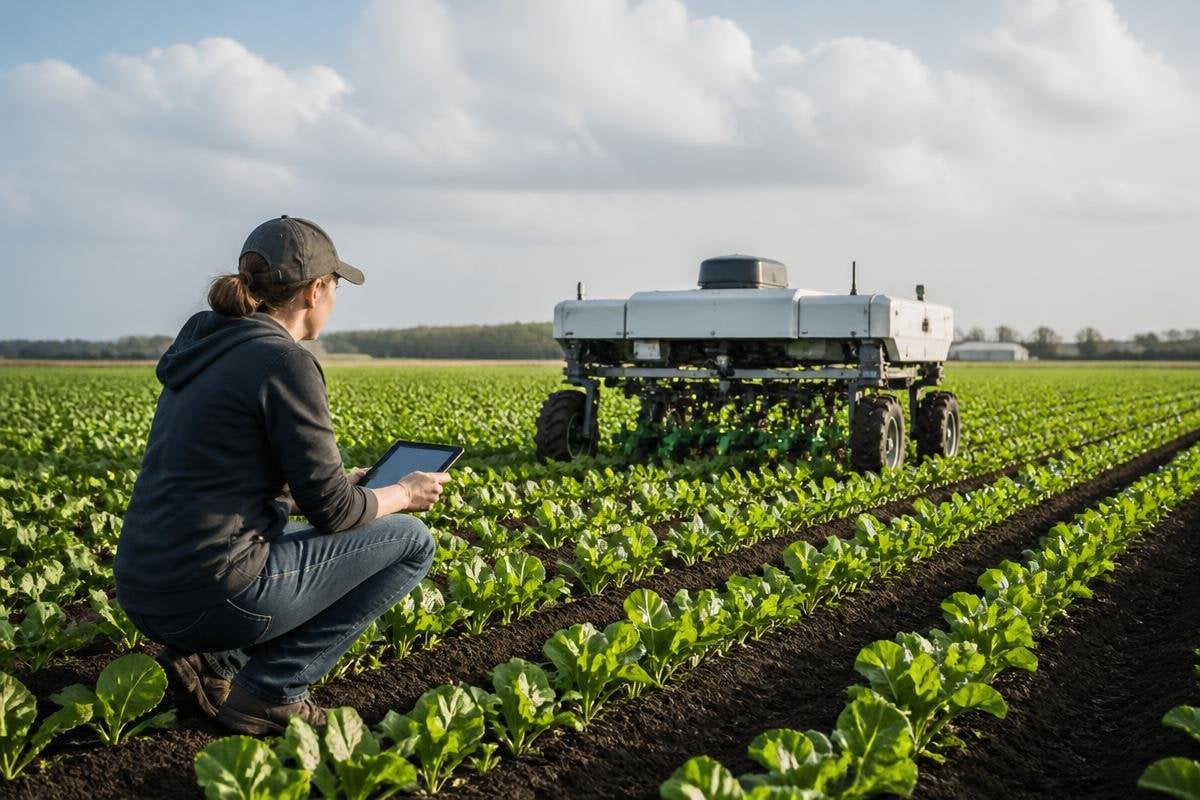
Farm robots can take on repeat work such as weeding, crop checks, milking, and packing. They can ease a labor shortage when the task is clear, the fields are prepared, and people remain available to manage the system.
Quick read
- Robots fit repeat jobs with clear routes and targets.
- Harvesting remains hard because crops vary in size, shape, and ripeness.
- The business case depends on uptime, service, and the cost of missed work.
Where robots fit today
Farm work suits robots when the same action happens many times under similar conditions. A weeding robot can follow crop rows and remove unwanted plants. A milking system can guide cows through a fixed process while recording output and checking equipment.
Those jobs still need people nearby. Someone must set field routes, inspect plants, clear blocked parts, and handle work the robot cannot identify. The robot reduces the amount of repeated labor; it doesn’t remove the farm’s need for skilled staff.
The same logic applies to crop monitoring. A mobile robot can carry cameras through rows and collect images for later review. That can help a grower find weak plants or signs of disease earlier, but a person still has to confirm the finding and choose the treatment.
Why harvesting is harder
Harvesting asks a robot to make many decisions at once. It must find the crop, judge whether it is ready, reach it without damage, and place it in a container.
Leaves, mud, shade, rain, and uneven ground can change the scene from one plant to the next. A human worker adjusts their hand and body without stopping to label each problem. The machine needs sensors, software, and a gripper that can handle those changes, which makes fruit and vegetable picking harder than following a marked row or moving a bin between fixed points.
The crop itself adds another limit. A machine built for one berry, apple, or vegetable may work well in one field and need major changes for another crop. A farm with several crops may need several machines, which raises the cost and the time needed for setup.
The farm has to change too
A robot works best when the farm gives it a predictable route. Row spacing, turning areas, field maps, charging points, and safe zones all affect daily work. A machine that spends much of its shift waiting for access or dealing with blocked paths may save little labor.
Service matters just as much. Dust, water, vibration, and plant material reach motors, cameras, wheels, and cables. A farm needs spare parts, software support, and a person who can find the fault before a missed day becomes a missed harvest.
Farm operators comparing automation projects can use farm automation news from Robot24.com to check the task, field conditions, and support plan behind each claim. A robot’s shape tells you little about whether it can work through dust, wet rows, plant material, and a full harvest day.
What the business case must include
A purchase decision should use the farm’s actual work calendar. Count the hours spent on the target job, the time when labor is hardest to find, and the cost of delays when the work waits.
The purchase may fit if it can run during the needed work window and if one person can supervise more than one machine. The case weakens when the robot needs constant help, works only in dry weather, or requires field changes that cost more than the labor it replaces.
I’d fund a farm robot only after a narrow pilot proves that it finishes the target job without daily rescue.
Farm automation checklist
- Name one task: choose a repeat job with a clear result, such as row weeding or bin movement.
- Measure the work: record labor hours, delays, field conditions, and missed shifts before buying.
- Check the route: confirm row spacing, turning space, slopes, charging points, and safe access.
- Plan service: identify who handles blocked tools, damaged sensors, software faults, and spare parts.
- Set a pass mark: decide how much work the robot must finish before a wider rollout.
- Keep a fallback: retain a manual process for rain, crop changes, or machine downtime.
Farm robots can help most when they take one hard-to-staff job and repeat it with little supervision. The farms that gain the most will likely be the ones that measure that job first, then buy a machine built for its exact conditions.