


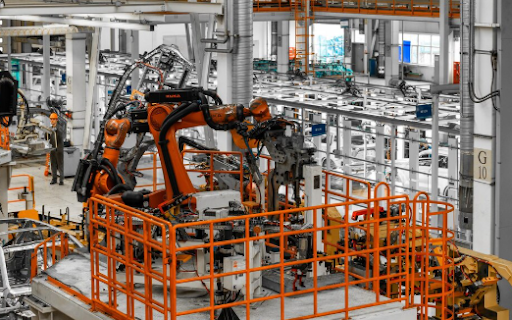
The Engine of Efficiency: Key Benefits of Industrial Automation Solutions
In the modern manufacturing landscape, the adoption of industrial automation solutions has become a fundamental necessity, rather than a luxury.
By integrating technologies such as robotics, advanced control systems, and data analytics, businesses can streamline complex processes, minimize human intervention, and optimize resource utilization.
This technological shift is crucial for companies aiming to remain competitive in global markets. Implementing industrial automation systems yields a multitude of direct benefits that translate into improved safety, efficiency, and ultimately, profitability.
Significant Reduction in Operational Costs
One of the most immediate advantages of industrial automation is the reduction in long-term operational costs. While the initial investment in automated machinery and software can be substantial, the recurring expenses decrease significantly.
Automated systems can work continuously with minimal supervision, drastically lowering labor costs associated with repetitive tasks.
Furthermore, the precision of automation minimizes material waste and optimizes energy consumption for machinery, ensuring that every cycle is executed with maximum efficiency, contributing directly to a stronger bottom line.
Enhanced Quality and Product Consistency
Humans, by nature, are prone to fatigue and error, which leads to variability in product quality. Industrial automation solutions, particularly robotics, perform tasks with extraordinary precision, repeatability, and consistency.
Once a process is programmed, a robotic system will execute it identically thousands of times, ensuring every product meets the exact specifications.
This high level of quality control is essential in regulated industries like pharmaceuticals and aerospace, where zero-defect manufacturing is paramount to safety and compliance.
Improved Workplace Safety
Automation drastically improves the safety profile of a manufacturing environment. By assigning dangerous, strenuous, or repetitive tasks to robots and automated machinery, companies remove human workers from hazardous conditions.
This includes handling heavy loads, working in extreme temperatures, operating near high-voltage equipment, or performing monotonous movements that can cause long-term injuries.
Prioritizing safety through industrial automation not only protects personnel but also reduces liability and insurance costs associated with workplace accidents.
Increased Production Output and Throughput
The pace and duration of human labor are naturally limited by shift changes, breaks, and fatigue. Automated systems, however, can operate 24 hours a day, 7 days a week, with only minimal downtime required for maintenance.
This continuous operation capability dramatically increases the total throughput and production output of a facility. Companies utilizing industrial automation can more reliably meet sudden surges in market demand and shorten production cycles, giving them a significant advantage in responsiveness.
Better Data Collection and Analytics
Automated systems are inherently integrated with sensors and monitoring software that collect vast amounts of operational data in real time.
This data is invaluable. It provides unprecedented insight into equipment performance, cycle times, energy consumption, and failure points.
Analyzing this information allows managers to identify bottlenecks, predict maintenance needs (predictive maintenance), and make data-driven decisions to further optimize the manufacturing process, transforming operations from reactive to proactive.
Greater flexibility and scalability
Modern industrial automation solutions are surprisingly flexible. Advanced robotic systems can be quickly reprogrammed and re-tooled to handle different product variations or entirely new production lines with minimal physical changes.
This ease of reconfiguration allows companies to quickly adapt to changing market trends and product cycles without needing to rebuild entire facilities.
This scalability enables businesses to efficiently increase production capacity as demand grows, ensuring that the manufacturing infrastructure can support business expansion.
